Insights
The Future of AI Campuses: From 100 MW Blocks to Multi‑GW Clusters
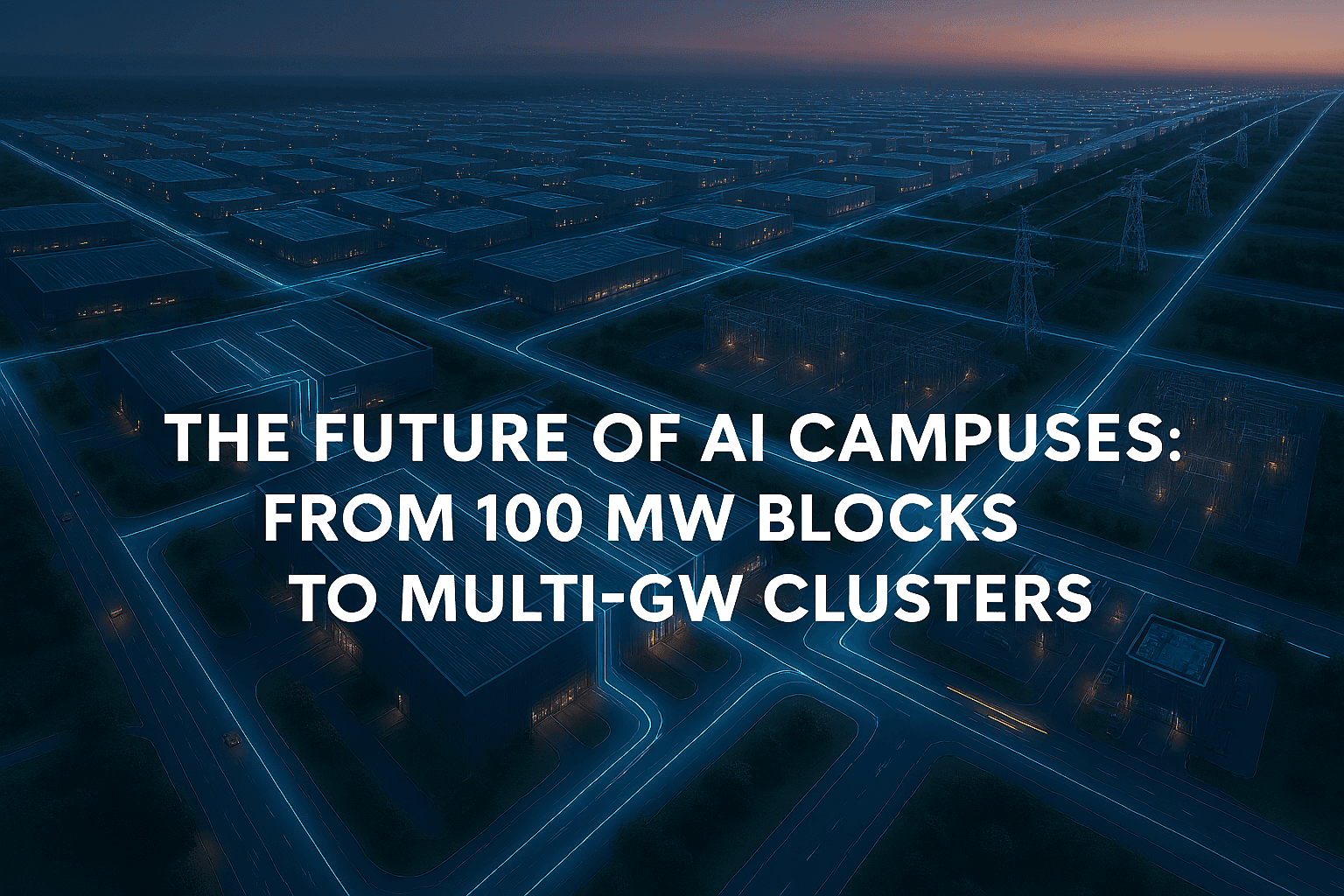
Why AI infrastructure is evolving into mega‑campuses—and what comes next.
AI infrastructure is undergoing a transformation unlike anything the data center industry has seen. What began as 5–10 MW colocation deployments have grown into 50–100 MW hyperscale blocks—and now into multi‑gigawatt AI campuses designed from the ground up for frontier‑model compute.
This shift is driven by three major forces:
1. Explosive demand for GPU‑dense compute
Frontier models require cluster sizes that were unimaginable just three years ago. Compute density per rack—once 10–15 kW—is now moving to 80–120 kW with liquid cooling. Only purpose‑built campuses can sustain these thermal and electrical demands.
2. Power integration at gigawatt scale
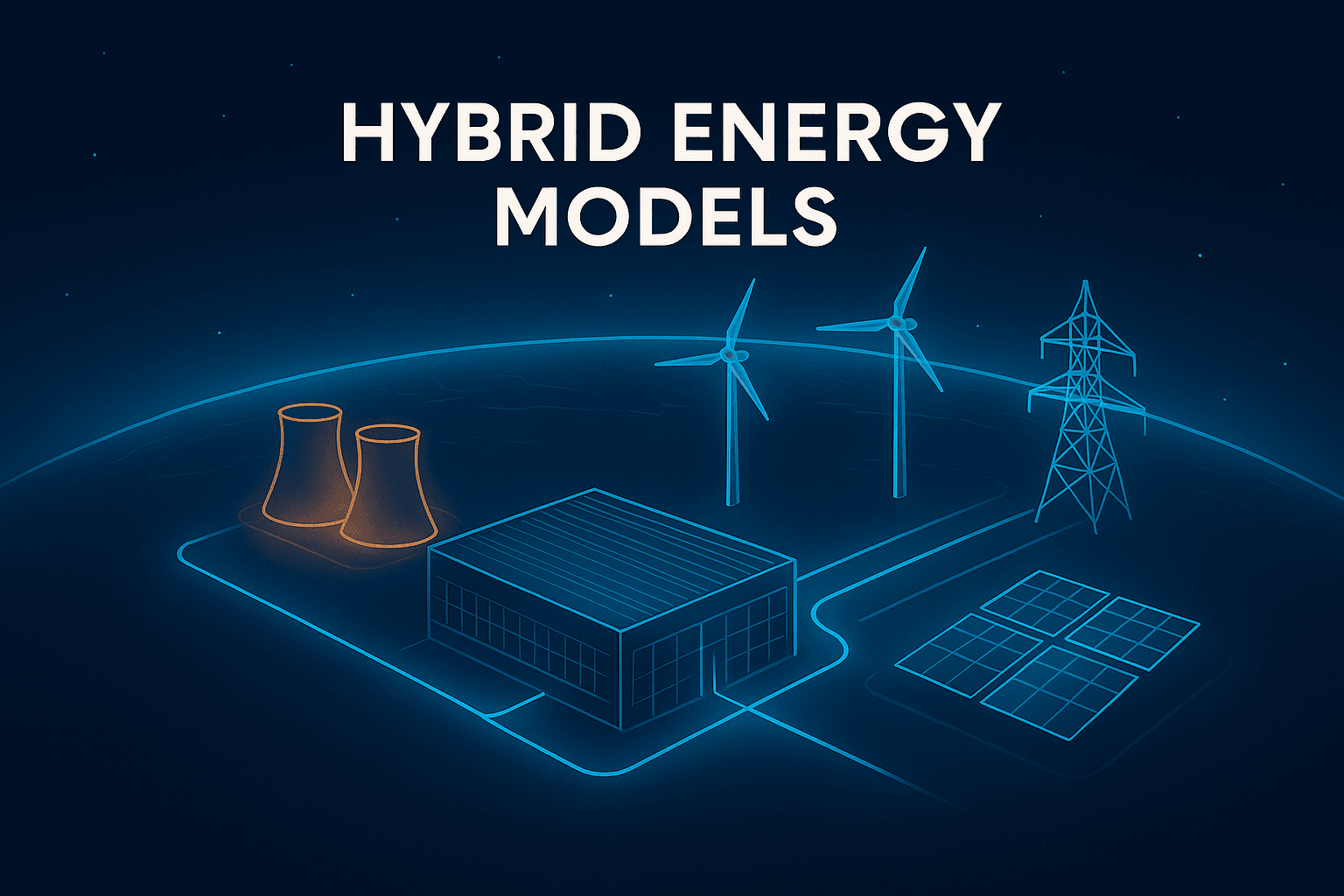
AI campuses no longer “connect” to the grid—they integrate with it. Campuses now require dedicated substations, transmission upgrades, and BTM generation to ensure supply security. This co‑design of power and compute is what enables multi‑GW scalability.
3. Modular campus design
AI campuses of the future are built in 100–200 MW increments. This modularity allows early capacity to go live while long‑lead items (transformers, turbines, utility upgrades) are still under construction. It also reduces capital risk by matching deployment to tenant demand.
Looking ahead, multi‑GW clusters will become the new global standard. These campuses will anchor national AI strategies, support sovereign workloads, and enable hyperscale's to train frontier models for decades. The world is entering an era where digital power is as essential as physical power—and the infrastructure we build today will shape the AI capabilities of tomorrow.